Walk around any busy marina and you’ll spot two types of boat. Those with barely two fenders dangling from each side — worryingly insufficient for anything beyond the calmest conditions — and those properly equipped with a full complement that allows the skipper to come alongside with genuine confidence. The difference is knowing the rules.
At Boat Fenders Direct, we supply professional-grade Polyform fenders to thousands of UK boaters every year, and “how many do I need?” is consistently one of our most frequently asked questions. Here’s the definitive answer.
The Basic Rule: One Fender Per Ten Feet, Minimum Three
The most widely accepted guideline is straightforward: use one fender for every ten feet of waterline length, with a minimum of three fenders per side. This means:
| Boat Length |
Minimum Fenders Per Side |
Recommended Total (Both Sides) |
| Up to 30ft |
3 |
6 + 1 spare |
| 31–40ft |
4 |
8 + 1–2 spares |
| 41–50ft |
5 |
10 + 2 spares |
| 51–60ft |
6 |
12 + 2–3 spares |
| 60ft+ |
7+ |
14+ with additional ball fenders |
These figures assume standard marina mooring in moderate conditions. If you regularly moor in exposed berths, tidal harbours or busy commercial marinas, increase these numbers by at least one or two.
Where to Position Your Fenders
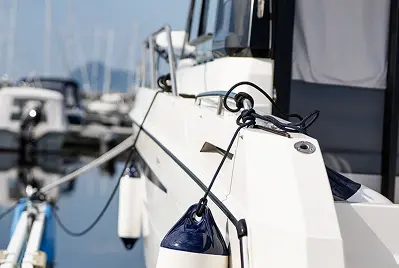
The number of fenders matters, but so does where you put them. For standard marina alongside mooring, always place:
- One fender at the bow quarter — positioned about a quarter of the boat’s length from the bow
- One fender amidships — at the widest point of the hull, where the most contact force is generated
- One fender at the stern quarter — a quarter of the length from the stern
- Additional fenders spaced evenly between these three anchor points on longer vessels
💡 Position Tip
Always tie your fenders to a solid structural point — a stanchion base, deck cleat or toe-rail fitting. Never rely solely on lifelines to hold fender loads. In a tidal berth or with strong wash, lifelines simply aren’t designed to take that strain.
Rafting Alongside Another Vessel
When you’re moored alongside another boat rather than a pontoon, your fender requirements change significantly. The key rule here is to position all fenders on the boat that is mooring — not the boat already moored. The vessel coming alongside should have:
- Your standard complement of side fenders in their normal positions
- Two or three additional fenders grouped tightly at the point of maximum beam
- At least one ball fender at the bow and stern to fill the gap between the two hulls at the ends
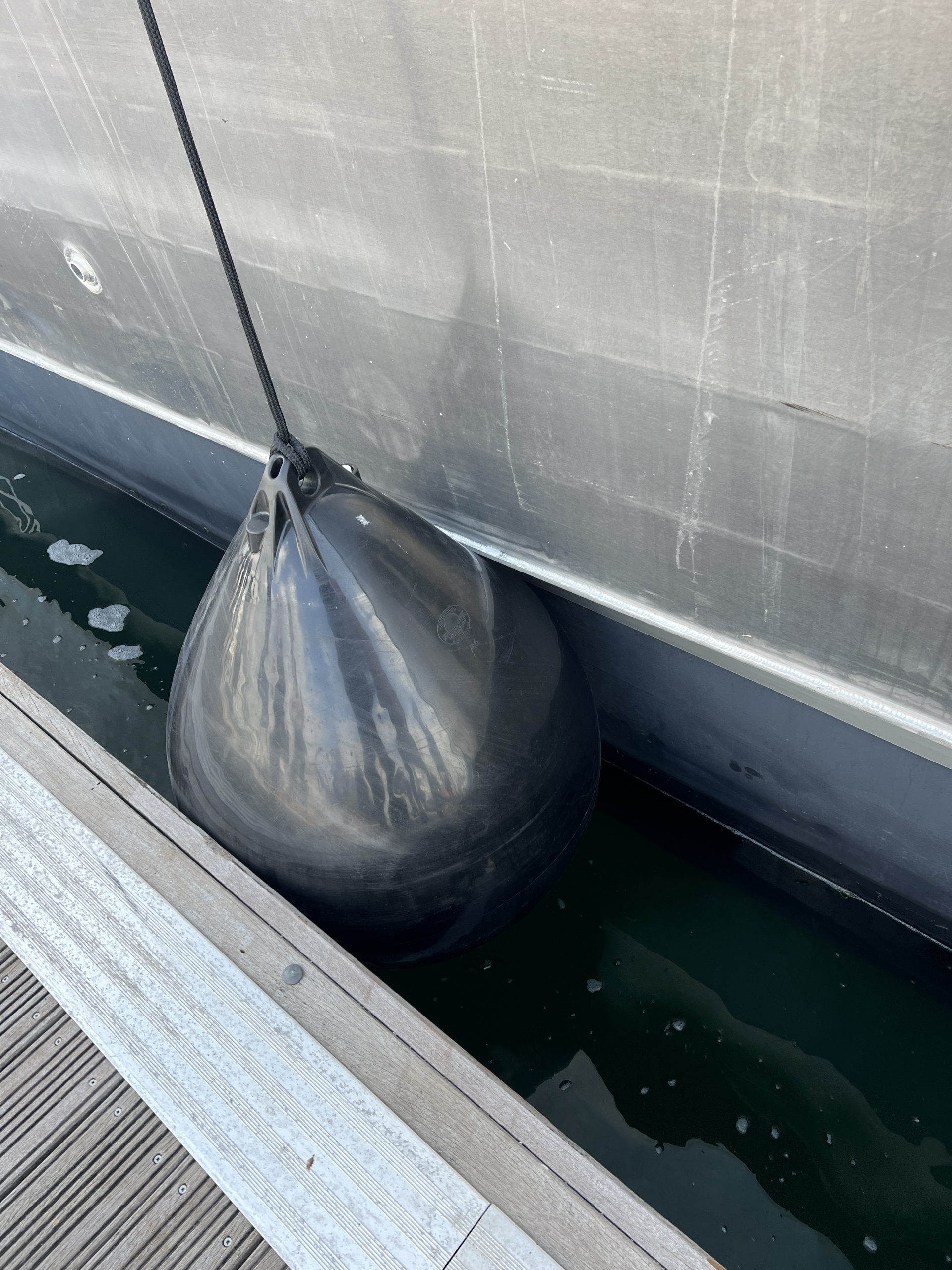
The Polyform A-Series works particularly well for rafting situations due to its rounder profile which fills the gap between hulls more effectively than cylindrical fenders alone.
Tidal Marinas: Why You Need More Fenders
Tidal mooring introduces a variable your fenders have to cope with throughout the day — the changing relationship between your hull and the pontoon as the tide rises and falls. A fender positioned correctly at high water may not be in the right place at low water.
In tidal berths, many experienced skippers use one additional fender beyond the standard count, positioned to cover the hull area that becomes most vulnerable at low water. Larger diameter fenders also perform better in tidal situations as they provide more coverage across a wider contact arc.
Canal and River Cruising: The Fender Board Solution
Narrow canals, river locks and quay walls present a specific challenge — uneven surfaces with protruding bolt heads, brickwork and timber that can damage hull and fenders alike. The solution many narrowboat and barge owners use is a fender board: a length of timber suspended horizontally from two fenders, creating a flat contact surface that distributes the load and protects against point damage.
For canal cruising, we typically recommend carrying a minimum of four side fenders per side plus a fender board. The Polyform G-Series and F1 and F2 are popular choices for canal boats due to their manageable size.
The Case for Carrying Spares
Experienced offshore sailors and long-distance cruisers always carry spares. Fenders get lost overboard, damaged by particularly sharp pontoon edges, or simply fail to hold pressure over time. For anyone planning a marina-hopping cruise along the UK coast or in European waters, we recommend carrying at least one or two spare fenders beyond your working set.
⚠️ Don’t confuse ‘fenders deployed’ with ‘fenders needed’. Many skippers put out three fenders and then only use two when they come alongside. Always deploy your full complement before manoeuvring — you don’t know exactly where you’ll make contact until you do.
Stock Up Before the Season
Browse our complete Polyform fender range — F-Series, A-Series and G-Series — with next day UK delivery available
Shop All Fenders →
Frequently Asked Questions
Can I use the same fenders for both sides of the boat?
Yes — there’s no left or right to a fender. Most boaters deploy fenders on both sides, moving them as needed depending on which side they’re mooring. Having enough fenders to fully protect both sides simultaneously is ideal for unexpected situations like having to raft up at anchor or moor on the wrong side.
How do I stop my fenders riding up over the pontoon?
Hang fenders lower than you think necessary — the bottom of the fender should just clear the water surface. Use a longer fender line to allow the fender to hang at the right height regardless of tidal changes, and tie the line as close to the fender as possible to reduce swing arc. Fend-Fix fender hangers clip to your rail and hold fenders at a consistent position without tying.