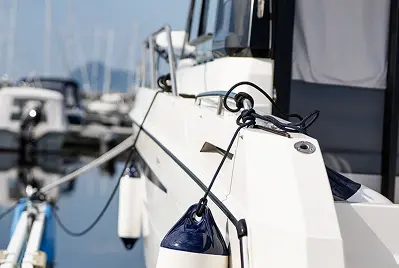
Choosing the right size boat fender is one of the most important decisions you’ll make for protecting your vessel — and one of the most common questions our team at Boat Fenders Direct hears every week. Too small, and your fender won’t absorb the impact between your hull and the dock. Too large, and you’ll be wrestling an oversized lump of PVC every time you come alongside.
The good news is there are some simple, tried-and-tested rules that make sizing straightforward. In this guide we’ll walk you through everything you need to know to choose the right Polyform fender for your boat.
The Golden Rule: One Inch of Diameter Per Five Feet of Boat Length
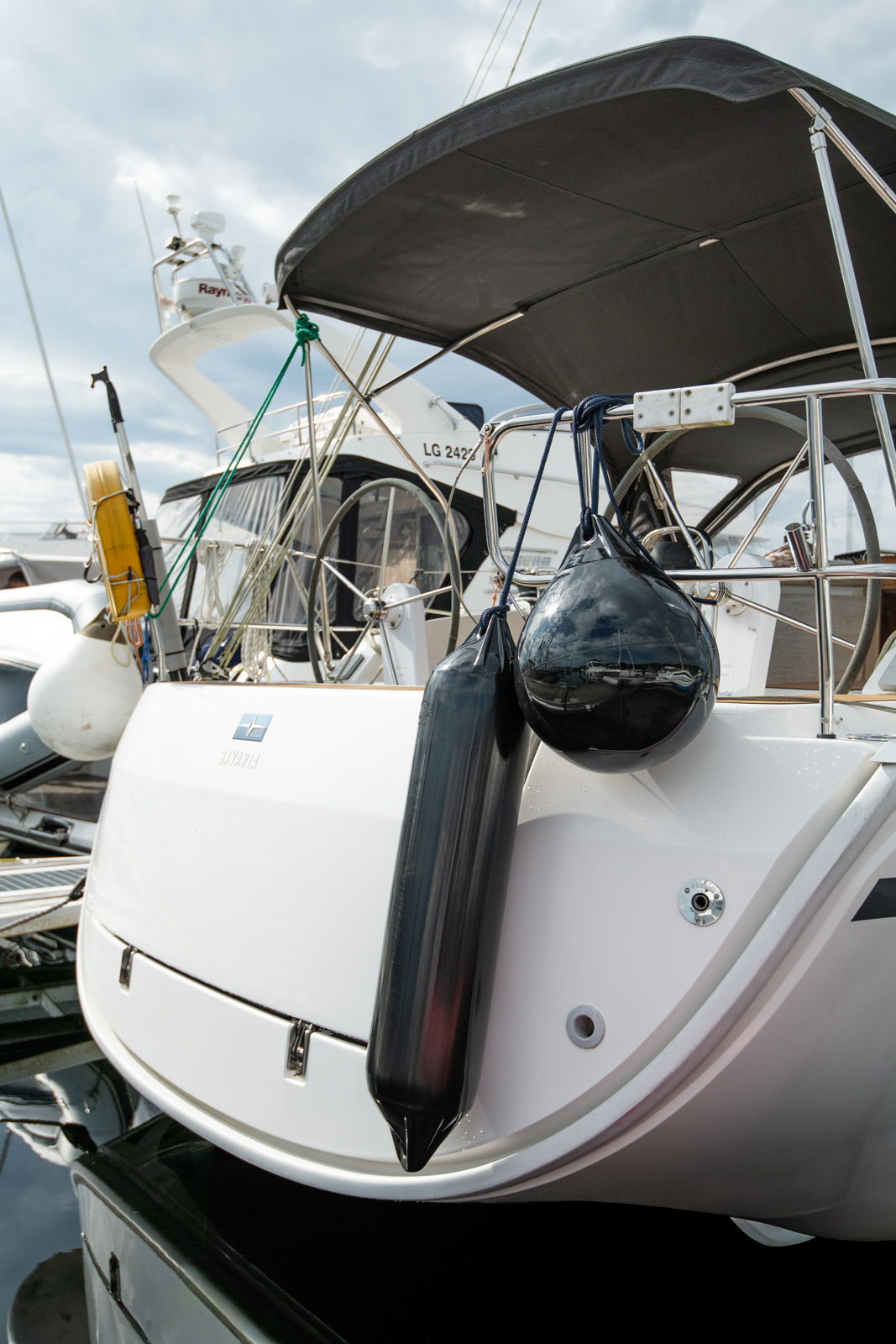
The most widely used sizing rule for cylindrical fenders is one inch of fender diameter for every four to five feet of boat length. So for a 25-foot yacht, you’re looking for a fender with approximately a five-inch (125mm) diameter or larger.
For round or ball fenders, double this — one inch of diameter for every two to three feet of boat length. Ball fenders are used primarily at the bow and stern where cylindrical fenders might swing out of position.
💡 Pro Tip from our Team
When in doubt, go up a size. A slightly larger fender provides significantly better protection, and the difference in price is minimal compared to the cost of gelcoat repair on your hull.
Polyform F-Series Size Guide by Boat Length
The Polyform F-Series is the UK’s most popular range of cylindrical boat fenders — and the one most boaters need for marina mooring and day-to-day use. Here’s exactly which F-Series fender is recommended for your boat size:
| Boat Length |
Recommended Fender |
Fender Diameter |
Min. Fenders Per Side |
| Up to 16ft (up to 5m) |
Polyform F01 Small / F01 Medium / F01 Large |
130–150mm |
2 |
| 17–23ft (5–7m) |
Polyform F01 Large / F1 or F02 |
150–200mm |
2–3 |
| 24–30ft (7–9m) |
Polyform F2 / F3 or F4 |
220mm |
3 |
| 31–45ft (9–14m) |
Polyform F5 / F6 or F7 |
220–290mm |
3–4 |
| 46–60ft (14–18m) |
Polyform F8 or F11 |
375mm |
4–5 |
| 60ft+ (18m+) |
Polyform F11, F13 or A-Series |
590mm+ |
5+ |
Polyform A-Series: For Larger Vessels and Multi-Purpose Use
For boats over 40 feet, or for any vessel that needs a more versatile fender that can also be used as a mooring buoy or marker, the Polyform A-Series is worth considering. The A-Series has a rounder, more oval profile that provides excellent protection at the bow and stern, and can be used vertically or horizontally.
| Boat Length |
A-Series Recommendation |
Dimensions |
| Up to 20ft |
Polyform A0 /A1 or A2 |
280mm x 210mm / 380mm x 295mm |
| 20–30ft |
Polyform A3 or A4 |
500mm x 390mm / 575mm x 460mm |
| 30–45ft |
Polyform A5 |
575mm x 460mm / 710mm x 550mm |
| 45–60ft |
Polyform A6 |
940mm x 710mm / 1120mm x 850mm |
| 60ft+ |
Polyform A7 |
1420mm x 1100mm |
Does Your Mooring Situation Affect Fender Size?
Yes — significantly. The sizing guide above is a starting point, but your mooring conditions should also influence your choice:
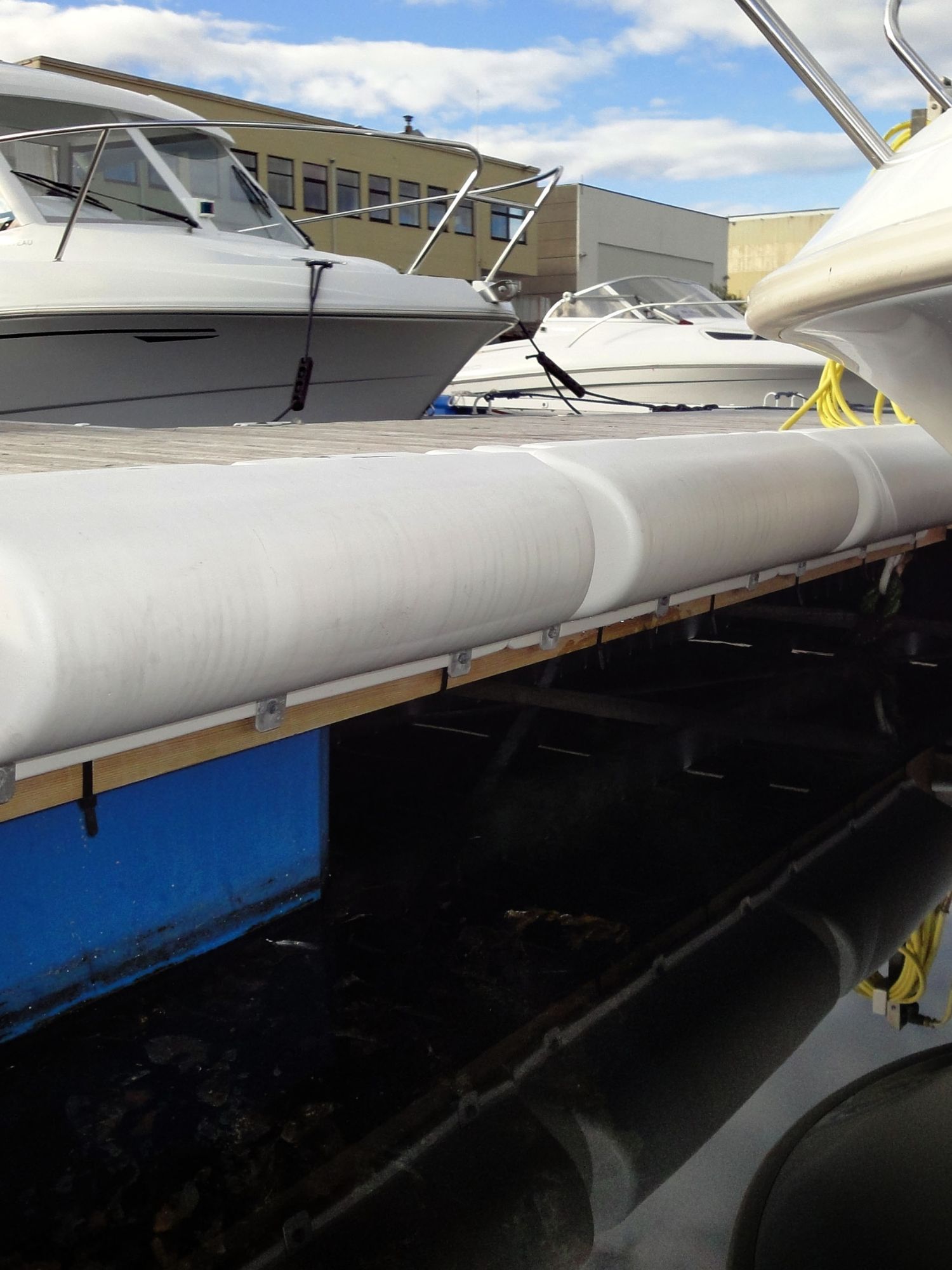
- Tidal marinas: Choose a fender that provides protection at both high and low water. Larger diameter fenders give more protection across the tidal range as your boat’s height relative to the pontoon changes.
- Exposed berths or marinas with strong wash: Go up at least one size from the guide above. The extra load from passing boat wash means you need more cushioning capacity.
- Rafting alongside another vessel: Use your largest fenders amidships where the contact point is. Position three or four fenders close together at the point of maximum beam.
- Canal and river locks: Consider a fender board — a plank of timber suspended horizontally from two fenders — to protect against bolt heads and uneven lock walls. The G-Series and F-Series both work well with fender boards.
What About Freeboard? The Height Factor
Freeboard — the height of your hull above the waterline — also matters. A vessel with high freeboard (like a motor cruiser or Dutch barge) will contact the pontoon higher up the hull, which means a longer fender is sometimes needed to provide adequate coverage. As a general rule, your fenders should cover at least two-thirds of the hull height that protrudes above the waterline.
⚠️ Never hang fenders so low that they touch or float in the water. This quickly causes deterioration of the fender material and is considered poor marina etiquette.
G-Series for Budget-Conscious Boaters
If you’re equipping a smaller boat or looking for reliable protection at a more accessible price point, the Polyform G-Series is an excellent choice. Blow-moulded from marine-grade vinyl with moulded-in ribs for extra strength, the G-Series is available in six sizes for boats up to 40 feet. Unlike many budget fenders, the G-Series uses the same quality ethos as the rest of the Polyform range.
Frequently Asked Questions
Can I use fenders from a different brand if they’re the same size?
Yes — any cylindrical fender with the same diameter and similar length will provide equivalent protection. However, we recommend Polyform for their superior seamless construction and long-term pressure retention. Cheaper fenders with welded seams often fail at the joint after one or two seasons.
My boat is right on the borderline between two sizes — which should I choose?
Always go up a size. The additional protection is worth far more than the marginal price difference, and you’ll never regret having a slightly larger fender when a heavy boat comes alongside in a busy marina.
Are Polyform fenders pre-inflated or do I need to inflate them myself?
Polyform fenders are shipped deflated to keep delivery costs low and avoid damage in transit. They inflate quickly using a standard pump or compressor with the
Polyform Inflation Adaptor. Full inflation instructions are included with every fender.
Find Your Perfect Polyform Fender
Browse our complete F-Series, A-Series and G-Series ranges — all with next day UK delivery from £2.95
Shop All Boat Fenders →