There’s a saying among experienced marina staff: you can always tell a new sailor by how they hang their fenders. Too high, too few, tied to the wrong point — the mistakes are common and the consequences can be expensive. Getting your fender placement right is one of the most basic but most important skills in practical boating.
Step 1: Choose the Right Height
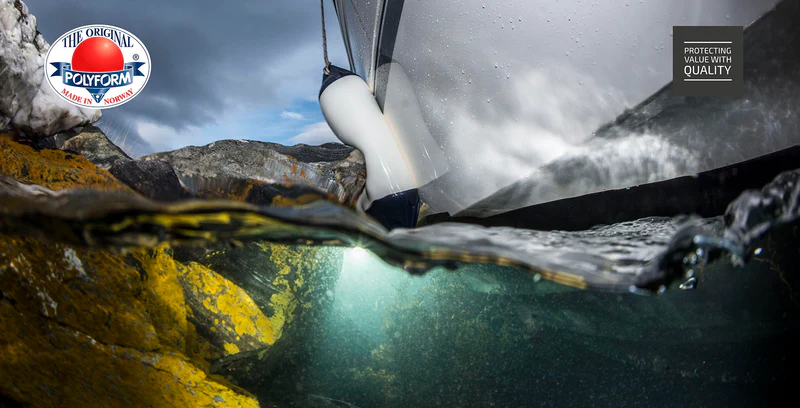
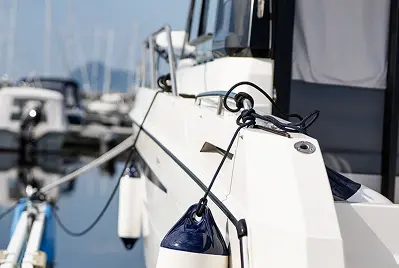
This is the most important variable and the one most often got wrong. Your fenders should be positioned so that the widest point of the fender sits level with the widest point of your hull — typically at or just above the waterline when the boat is at rest.
In practice, hang the fender so its bottom just clears the water by an inch or two. Too high and the fender will ride over the top of the pontoon edge when you surge forward or backward. Too low and the fenders will float, wear out quickly, and look scruffy.
⚠️ Fenders that touch or drag in the water will deteriorate rapidly and are considered poor marina etiquette. Always adjust height after mooring to ensure they’re just clear of the surface.
Step 2: Vertical or Horizontal?
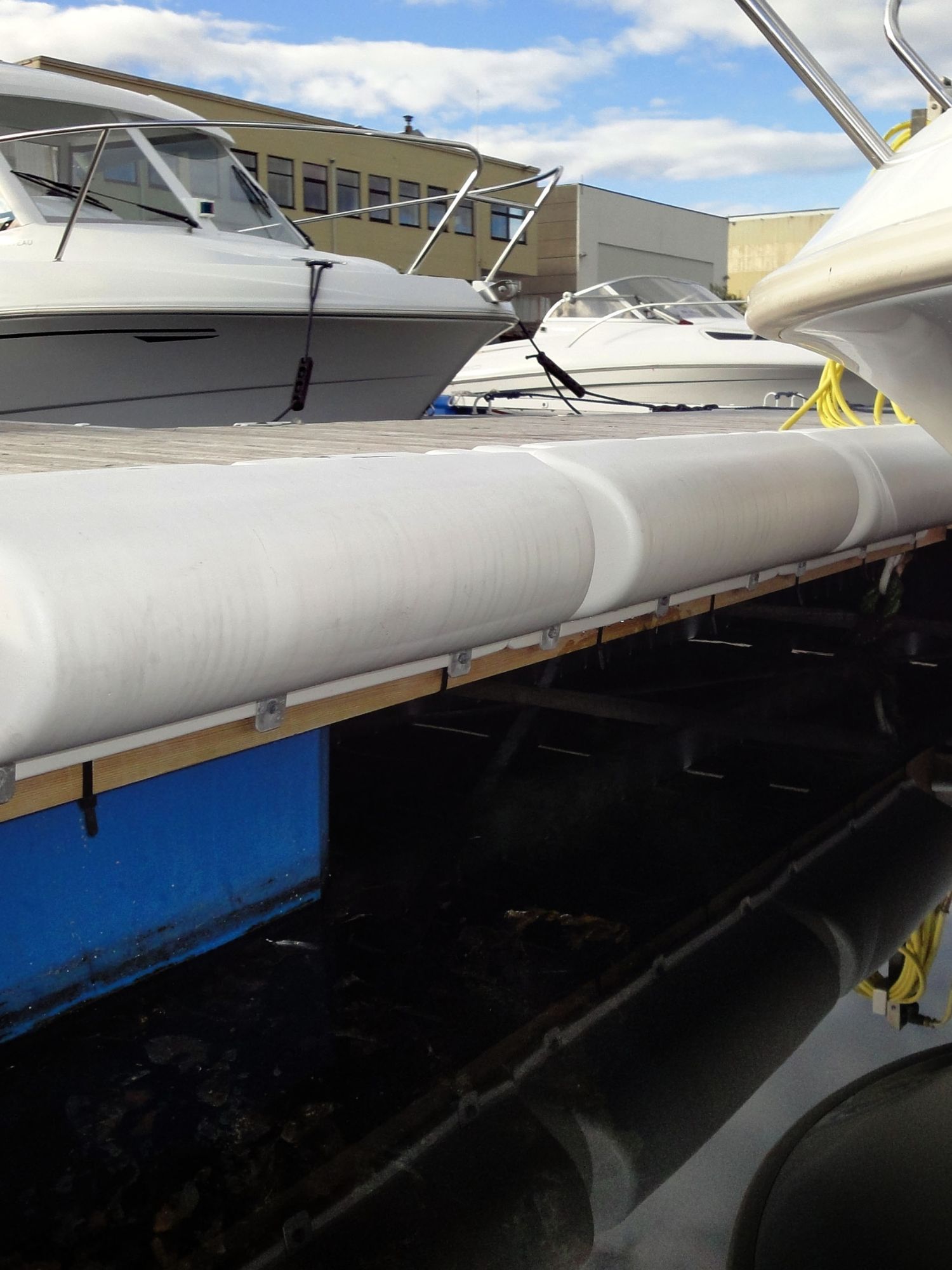
Vertical hanging is the standard position for most alongside mooring situations. The fender hangs end-on against the hull, with the rope tied through the top eye. This gives maximum coverage and the best protection against flat surfaces like dock walls and pontoons.
Horizontal hanging is used when you’re mooring against a surface with horizontal ledges, guide rails or rubbing strakes, or when mooring in a lock where vertical motion is expected. Tie the rope through the centre rope hole (if your fender has one) or through both eyes to hang horizontally.
The Polyform F-Series and A-Series both have rope eyes at each end, making them suitable for either orientation.
Step 3: Choose the Right Attachment Point
This is another area where novices regularly make mistakes. The correct attachment points for fender lines are:
- Stanchion bases — the most popular and usually strongest option
- Deck cleats — solid and secure, particularly good for larger fenders
- Toe-rail fittings — available on many yachts specifically for fender attachment
Never rely solely on lifelines to carry fender loads. In a tidal berth or with any surge, the forces involved can be surprisingly large and lifelines simply aren’t designed to carry them. Using lifelines as the primary attachment risks damaging your safety equipment and potentially losing the fender.
Step 4: Use the Right Fender Line
Fender line diameter matters. Too thin a rope acts like a knife against the fender’s ropehold — gradually cutting through the PVC where the line exits the fitting. Polyform recommends using nylon rope where possible, as nylon has inherent stretch that reduces shock loads on the ropehold. Avoid polypropylene (the blue or orange floating rope) as it has little stretch and can damage ropeholds over time.
Our Aqua Marine fender lines come pre-spliced with a soft eye for easy attachment and are available in lengths to suit F and A-Series fenders.
Step 5: Consider Fend-Fix Hangers
If you find yourself constantly fiddling with fender lines or struggling to get fenders at exactly the right height, Fend-Fix fender hangers clip directly to any rail and allow you to hang fenders quickly at the exact right height without tying any knots. They’re particularly useful for shorthanded crews or anyone who regularly moves between different berths.
Complete Your Fender Setup
Fenders, lines, covers and hangers — everything you need for perfect protection, in stock with next day delivery
Shop Accessories →